
Membership site owners often juggle numerous operational tasks—from managing content delivery to engaging users and handling support requests. While AI automation has become a popular topic, there remains a noticeable gap in practical guidance focused on tailoring AI workflows specifically to the unique operational needs of membership sites. This article aims to fill that gap by explaining clear, task-relevant AI workflows that membership site owners can implement today, using plain language and real-world examples.
Task-relevant AI workflows are AI-powered processes designed with a specific operational goal in mind. Instead of generic automation, these workflows focus on high-impact tasks that directly improve site management and member experience. Examples include automating member onboarding, personalized content recommendations, and proactive customer support.
For membership sites, this means using AI not as a vague “productivity booster” but as a targeted solution to recurring bottlenecks and manual chores.
Let’s break down three core operational areas where AI workflows can bring measurable improvements:
Onboarding new members is critical but time-consuming. AI chatbots or assistant systems can guide new users through registration, membership tier selection, and initial content discovery. These AI agents can answer common questions instantly, reducing support tickets.
Example: An AI workflow triggers a welcome email sequence personalized to the member’s interests and membership level. Simultaneously, a chatbot helps users set up their profiles and suggests starter content based on their preferences.
AI models can analyze member interactions to recommend relevant courses, articles, or events, keeping users engaged and reducing churn. This workflow involves collecting usage data, running recommendation algorithms, and integrating suggestions seamlessly into the user dashboard.
Example: If a member frequently accesses beginner tutorials, the AI can prioritize showing intermediate lessons next, encouraging progression without manual intervention.
AI-driven ticket triage and automated FAQs can resolve common issues before they escalate. AI systems can classify incoming support requests and either provide instant answers or route complex issues to the right team, saving time and improving member satisfaction.
Example: When a member asks about payment issues, the AI automatically provides troubleshooting steps or directs them to billing support, reducing wait times.
Implementing these AI workflows does not require deep technical expertise. Many AI services offer no-code or low-code platforms that integrate easily with common membership site tools like WordPress plugins or CRM systems.
Start by mapping your most repetitive or time-sensitive tasks. Then explore AI tools that specialize in those areas—such as chatbot builders for onboarding or content recommendation APIs. Pilot small workflows, measure impact, and expand iteratively.
For those looking to explore AI solutions that streamline repetitive business tasks, consider checking out Turn Repetitive Business Work Into Automated Flows. This resource offers actionable insights on designing AI workflows tailored to your business needs.
Choose one operational pain point in your membership site—such as onboarding or support—and identify an AI tool that can address it. Set a clear goal, like reducing manual onboarding time by 50% or cutting support ticket volume by 30%. Implement the workflow in a controlled way and track your metrics over 30 days.
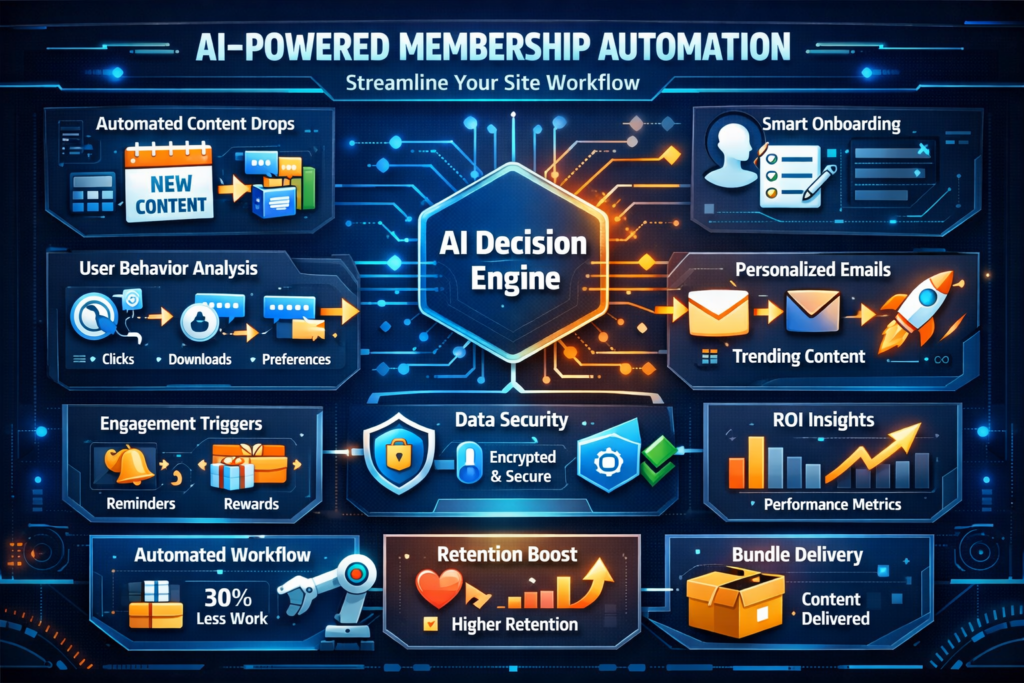
AI development for membership sites should be practical and measurable, focusing on workflows that solve specific business challenges. By targeting task-relevant AI solutions like automated onboarding, personalized content delivery, and streamlined support, site owners can enhance member experience while saving time and operational costs.
Start simple, measure results, and build on success. This grounded approach to AI operations will help membership sites grow sustainably without falling into the trap of vague automation promises.